
Sliding Gate Installation in Miami-Dade County
When driveway clearance is limited, a sliding gate solves the layout problem. The full travel path is measured at no charge: racking distance, grade, and operator load included.
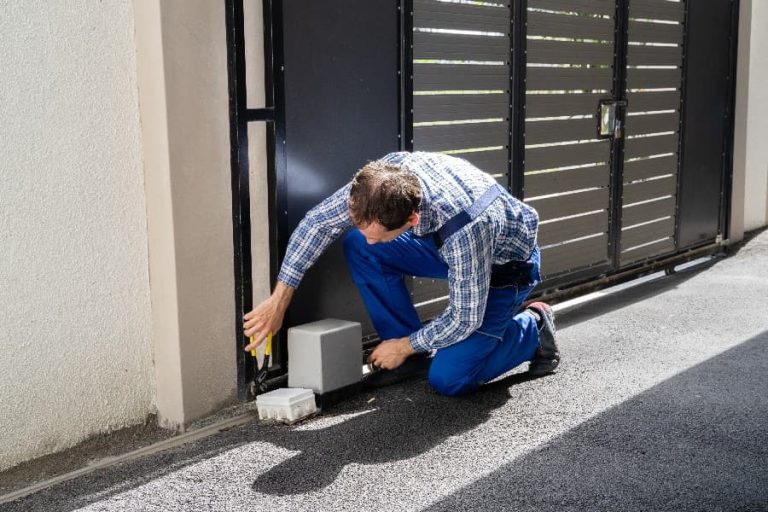
Which Sliding Gate System Fits Your Miami-Dade Property?
A sliding gate solves the clearance problem that stops a swing gate cold. Most Miami-Dade lots are flat and tight, a sidewalk on one side and a parked car on the other. A swing gate needs room to arc; when that arc is blocked, the gate either hits something or doesn't open wide enough for a truck. For properties where the layout allows it, swing gate installation for properties with clearance is worth comparing first. A sliding gate moves parallel to the fence line instead of swinging out, which opens up driveways where swing gates simply can't work.
Two systems handle most properties here. A cantilever gate hangs above the ground on support rollers instead of riding on a track, so debris, pavement cracks, and root-heaved concrete don't interfere with it. A track-based sliding gate rolls along a steel track bolted to the ground and handles heavier loads well when the travel surface is clean and level. Which one fits depends on your surface, gate weight, and racking distance, the clear space behind the post needed for the gate to slide fully open. We measure that first. For a full overview, see our guide to automatic gate installation in Miami-Dade.
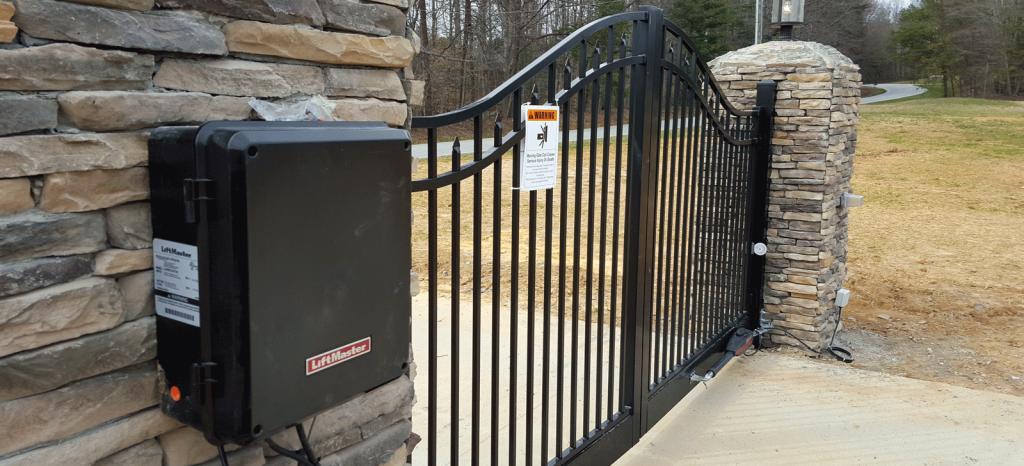
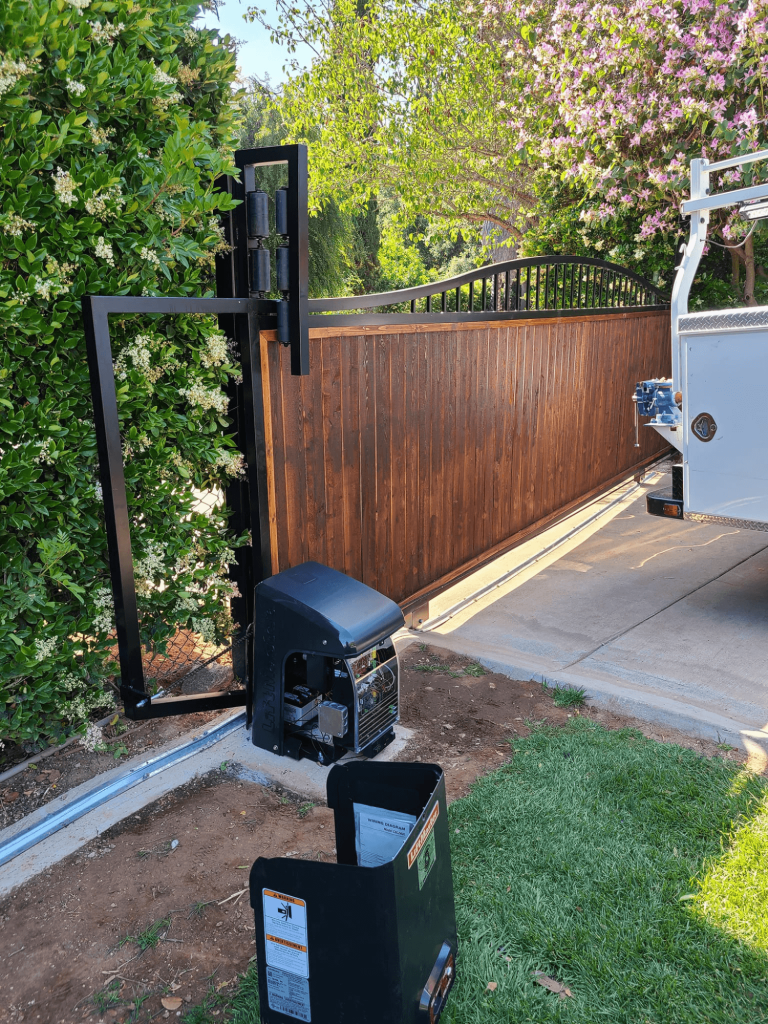
15 Years of Gate Installs Across South Florida's Flat Lots and Narrow Entries
Access Experts 247 has been installing automatic sliding gates across Miami-Dade for over 15 years, from Hialeah and Doral in the west to Miami Gardens and North Miami in the northeast. The properties vary: HOA perimeter entries (see our resource on HOA gate permits and the approval process), single-family driveways, commercial loading areas, and multi-unit complexes.
Here's what most homeowners don't realize about South Florida lots: the ground looks level but rarely measures that way. Seasonal moisture shifts the soil and driveways crack and heave unevenly. Understanding what South Florida's climate does to gate hardware explains why a track that's perfectly set in dry season can bind after the first heavy rain if the grade wasn't measured across the full travel path. We've seen it. We measure for it. Every site assessment includes a grade check from the gate post to the full open position, not just at the post.
How One Pre-Install Measurement Changes the Outcome of Every Job
The measurement before the install is what separates a gate that lasts from one that fails at six months. We've been on installs where the opening width was measured and the gate was ordered, but nobody had checked the racking distance behind the post. A 16-foot gate ordered against 11 feet of racking space can only open halfway before hitting a wall-mounted utility box. That's not a minor adjustment. That's a complete reinstall.
The fix was a cantilever configuration with a stacked racking design. That required a different gate post anchor, set deeper to carry the cantilevered load, and a different operator load rating: the motor had to be sized for the actual gate weight, not the width alone. Proper gate operator sizing and installation starts with those site measurements, not catalog defaults. That pre-install measurement added two hours to planning and prevented a complete reinstall later.
A V-groove roller, a wheel with a V-shaped groove that rides a matching track and carries the gate's full weight, has to be matched to the track gauge and gate load. If those numbers aren't confirmed before materials are ordered, the roller wears out in under a year. We spec everything from site data, not from a catalog assumption. Three measurements. Not one. That's the standard.
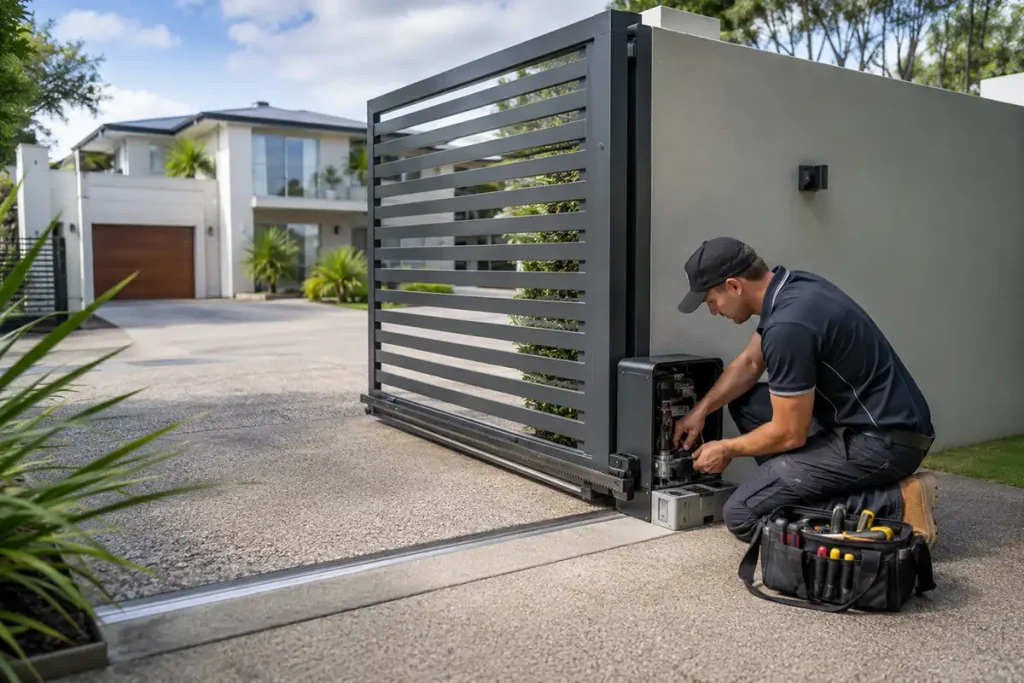
Built to Florida Wind-Load Standards and Miami-Dade Permit Requirements
South Florida sits in a high-velocity hurricane zone. Gate posts, operator mounts, and anchor footings all carry wind-load requirements that exceed what most inland states require. Miami-Dade enforces its own product approval standards on top of state code, and the Miami-Dade County Building Department permit requirements are handled as part of the installation scope when a permit is required.
We follow both. Post anchor depth is calculated against soil type and gate surface area, not just gate weight. Operator mounting hardware is rated for the wind exposure category on your specific site. This isn't extra. It's how the job gets done here.
Our Five-Step Installation Process, From Site Read to Final Calibration
Every install follows a five-step sequence, no steps skipped, no calibration deferred.
Site Assessment & Measurement
Travel path, racking distance, ground grade, and surface type, all confirmed before material selection.
System Selection
Cantilever or track-based configuration determined by site data. Operator load rating matched to actual gate weight.
Foundation & Post Anchor
Concrete footings set to Florida wind-load depth requirements. Anchor hardware torqued to spec.
Gate & Operator Mounting
Gate hung, track or roller system installed, operator wired and connected. V-groove rollers seated and load-verified.
Travel Limit & Calibration
The travel limit adjustment, which tells the operator exactly where to stop at open and closed, is set and tested through a full cycle.
Materials on every install: galvanized or powder-coated steel, UL-listed gate operators, and Grade 5 or higher hardware at all structural connection points.
What the Crew Confirms Before Leaving Your Property
Runs parallel to the fence line with no lateral drift.
Minimum 1-inch clearance at all points along travel.
Open and closed stops tested three times each.
Motor amperage measured against the rated load.
Override tested and accessible from both sides.
Auto-reverse sensitivity tested with a static load.
Travel limit settings are documented and left with you in writing. If the system needs a limit reset after seasonal soil shift, you'll know which adjustment to make, or call us back and we handle it.
Sliding Gate Installation Across Miami-Dade, Every Neighborhood We Cover
Access Experts 247 installs sliding driveway gates throughout Miami-Dade County. Broward and Palm Beach installs are also available, and most Miami-Dade service calls reach you within 45 minutes of dispatch.
Schedule Your Site Measurement and Get an Itemized Install Quote
One phone call starts your sliding gate installation, site measurement included at no charge. Call us and the crew measures travel path, racking distance, grade, and operator load before any system is specified. You get an itemized quote based on your actual site data, not a range pulled from a price sheet. Available 24/7 for scheduling and project questions.
Call us nowSchedule Your Site Measurement
Tell us about your driveway and clearance, or call us. The crew measures travel path, racking distance, grade, and operator load before any system is specified, at no charge.
Request Assessment
Frequently Asked Questions
What's the difference between a cantilever gate and a track-based sliding gate for a Miami-Dade driveway?
A cantilever gate hangs above the ground on support rollers and moves without touching the surface. A track-based gate rides a steel rail bolted to the ground. Cantilever systems handle uneven pavement, root-heaved driveways, and Miami-Dade's shifting soil conditions better than track systems. Track-based configurations carry heavier gate weights when the travel surface is clean and consistently level.
How much racking space does a sliding gate actually need behind the post?
Racking distance equals the full gate width plus 20 percent in most standard configurations. A 16-foot gate needs roughly 19 to 20 feet of clear space behind the post. That space must stay free of utility boxes, landscaping, and parked vehicles. We measure it on-site before any system is selected, not after the gate is ordered.
How long does a sliding gate installation take from site assessment to working gate?
Most residential sliding gate installations complete in one to two days. Day one covers post anchor work and foundation setting, since concrete footings need cure time before operator mounting. Day two completes the gate hang, operator wiring, and travel limit calibration. Commercial installations with multiple operators or permit requirements run longer. Timeline is confirmed at the site assessment.
Does Miami-Dade County require a permit for a sliding gate installation?
Most motorized sliding gate installations in Miami-Dade require a mechanical and electrical permit. The permit covers operator wiring, post anchor depth, and safety sensor connections. A permit-free installation has no certificate of completion, which creates a disclosure problem at resale and a coverage gap at insurance renewal. We handle the permit application as part of the installation scope when required.
What happens if the operator is undersized for the gate's actual weight?
An undersized operator fails early, typically within six to eighteen months of installation. The motor runs at or above its rated load on every cycle, and that continuous overload burns out the drive mechanism before its expected service life. Operator load rating, the maximum gate weight a specific motor is designed to move, is matched to the gate's confirmed weight during our site assessment, not estimated from width alone.
What does the crew check before leaving after a sliding gate installation?
Six items are confirmed before sign-off: gate alignment along the full travel path, minimum ground clearance at all points, open and closed travel limit settings tested three times each, motor amperage verified against rated load, manual release function tested from both sides, and auto-reverse sensitivity confirmed with a static load. Travel limit settings are documented and left with you in writing.