
Automatic Gate Installation in Miami-Dade County
Every installation starts with a site measurement, not a catalog pick. Footing depth, conduit run, and wind-load rating are calculated before any equipment is ordered.
Swing Gate or Sliding Gate: How to Choose Before Anything Gets Quoted
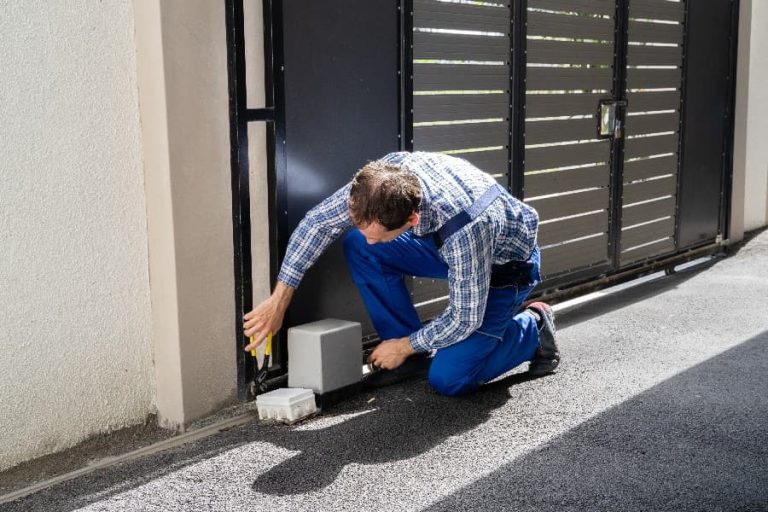
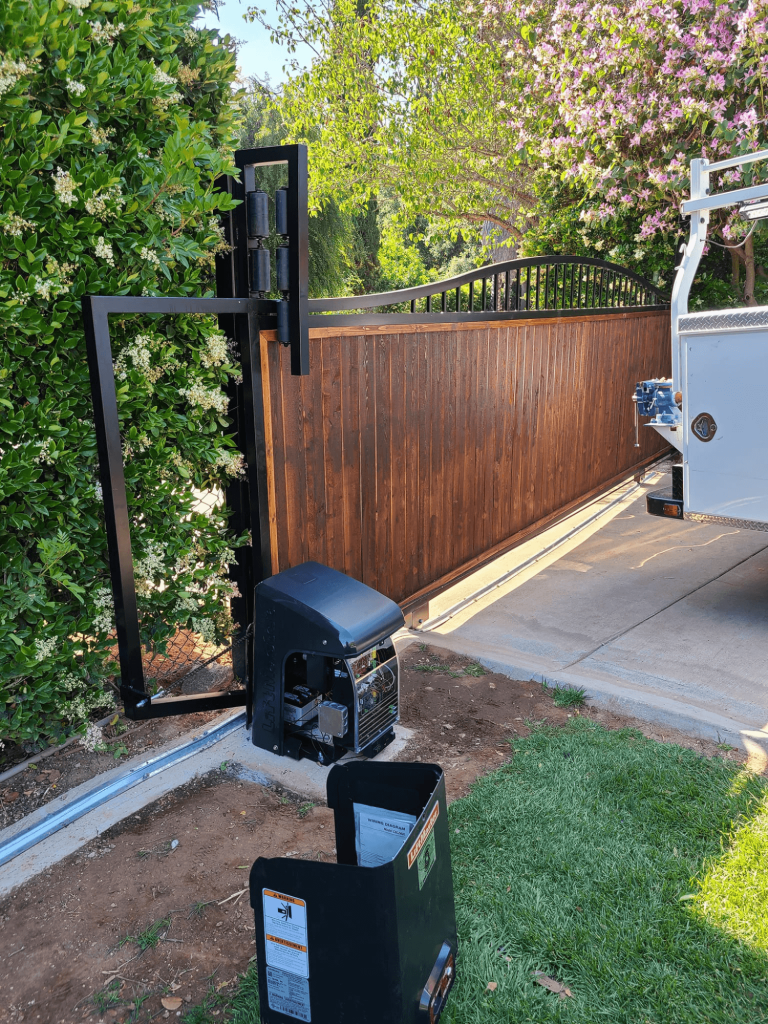
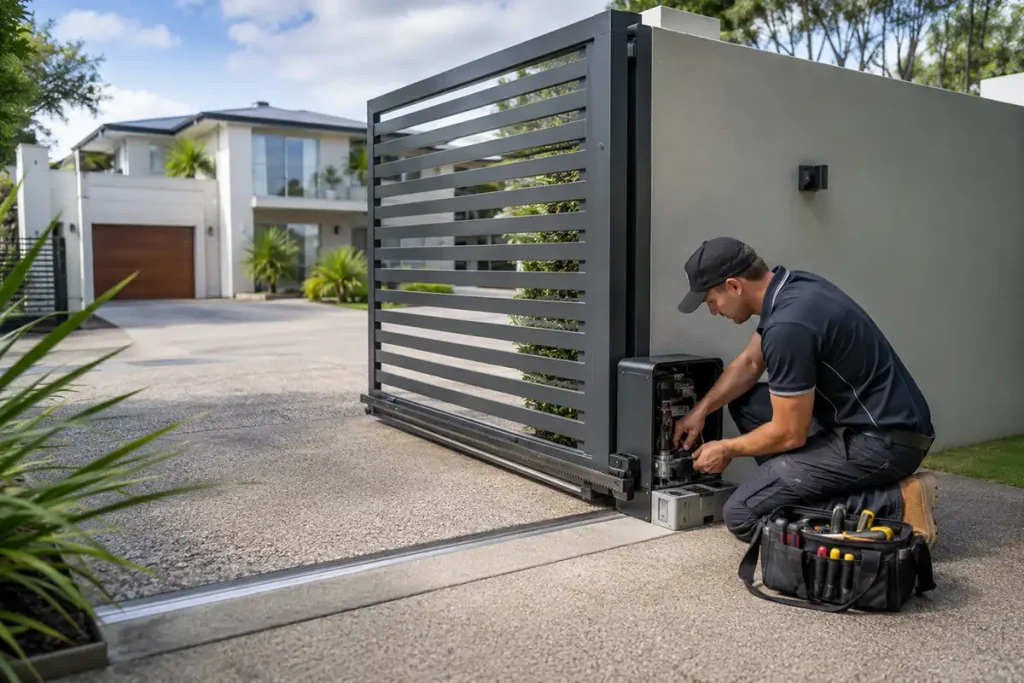
The gate type that works on your property is determined by your driveway geometry, not your preference. Two motor types power most residential and commercial automatic gates in Miami-Dade. A swing gate operator, a motor unit that pushes or pulls a gate open on a hinge like a door, needs clear swing space in front of or behind the gate post. A sliding gate operator, a motor unit that moves a gate sideways along a track, works where there isn't enough room to swing.
If your driveway is flat at the gate line and you have clear swing space, either type works. If there's a grade change at the gate line, a sliding gate is the correct choice, an articulating arm can't compensate for that, and we offer sliding gate systems for grade-change driveways sized to your specific entry conditions. We size the operator to match the gate weight rating before anything is quoted. Learn more about our gate operator sizing and installation service, or explore our swing gate installation options if your driveway geometry supports it.
How Miami-Dade's Lots Have Shaped the Way We Plan Every Installation
Miami-Dade County's land is not one thing, and gate installations reflect that. A waterfront lot in Key Biscayne sits on fill over limestone. The soil composition there requires a different concrete footing depth, the underground anchor block that supports the gate post against wind and gate weight, than a sandy inland lot in Doral or a compacted clay-fill parcel in Hialeah.
The county's Florida Wind-Load Standard adds another layer. Miami-Dade enforces stricter requirements than most of Florida, see the Miami-Dade County Building Department permitting requirements for the full scope of what that standard covers. That standard sets how much wind force a gate structure must withstand without failing.
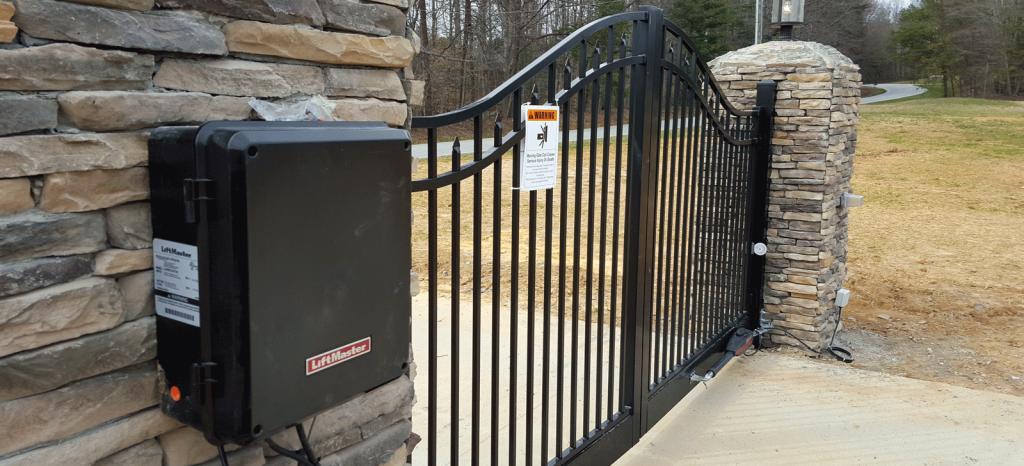
Here's what many property owners don't realize about wind-load ratings: the post footing, the gate frame, and the operator bracket are all part of the load path. If any one of those three is undersized, the whole system is at risk in a named storm. For properties that require compliant hardware from the ground up, we install hurricane and wind-rated gate systems in Miami-Dade built to meet the full post footing and bracket specification. After 15+ years of installations across this county, we plan for the site in front of us, not a hypothetical average lot.
What a Pre-Installation Site Walk Actually Reveals on a Miami-Dade Property
Every site walk turns up at least one condition that changes the installation plan. Our crews have worked installation jobs in Miami-Dade long enough to plan for surprises. Not every property presents one, but enough do that we never skip the site walk.
On a recent driveway gate installation in Pinecrest, a single-family home with a wide entry and a clean brick paver approach, the property looked like a straightforward swing gate job on paper. The site walk revealed a two-inch grade drop across the entry width. A standard swing gate operator set at a fixed mounting height would have dragged the gate on the high side and left a gap on the low side. The plan was adjusted on the spot: a longer articulating arm configuration on the high-side post and a shimmed operator bracket compensated for the grade difference. The owner hadn't noticed the slope. It isn't obvious until you're holding a level on the gate line.
The underground conduit run, the buried pipe that carries electrical wiring from the power source to the operator, also shifted. The original plan brought power from the east side of the house. The site walk revealed a landscape irrigation line running exactly where the trench was planned, so power was rerouted to the west side before any digging started. That's what a pre-installation site walk does: it finds the conditions that would have added a call-back and a change order after the fact. We include it in every electric gate installation job in Miami-Dade County, no exceptions. Property owners should also be aware of the permit and approval process for gate installations, which can affect timeline and equipment selection.
Built to Handle Florida Wind-Load From Day One
Every gate we install is sized and mounted to Miami-Dade's wind-load requirements before the first post goes in.
Miami-Dade County enforces the Florida Wind-Load Standard at a higher threshold than most Florida counties. For gate installations, this means post footings must be sized for lateral force, not just vertical support; gate frames must meet the specified wind-resistance rating for the panel area; and operator brackets must be secured to the post with rated hardware, not standard lag bolts. We verify all three on every residential gate installation and commercial gate installation we complete here.
Buyers often ask whether the gate needs to meet the same standard as their hurricane shutters. Not exactly, but the engineering logic is similar. The gate is a large, heavy panel exposed to open air at your property line. In a named storm, a gate that isn't anchored to spec becomes a projectile risk. We hold to the full footing depth and bracket spec on every job because the standard exists for a reason, and 15+ years in South Florida has shown us exactly why.
The Six Steps We Follow on Every Gate Installation We Complete
We follow the same installation sequence on every job, no shortcuts based on job size.
Site Assessment
Entry width, driveway grade, soil composition, and wind-load exposure all measured and logged before equipment selection.
Gate Type Selection
Swing gate or sliding gate chosen based on site data, not default preference. Operator weight rating matched to gate panel mass.
Footing Preparation
Concrete footing poured to the depth and width required for the post load and the Miami-Dade wind-load standard.
Underground Conduit
Conduit trenched and laid before concrete sets, carrying electrical wiring from the power source to the operator location.
Operator & Hardware Mount
Gate operator, articulating arm or track system, and all mounting hardware installed and torqued to rated specs.
Commissioning & Test
Gate cycled through full open and close sequences, limit switches adjusted, safety sensors tested, and remote or keypad access confirmed before the crew leaves.
Three coats of anti-corrosion primer on all exposed steel hardware. Not two.
From Footing Pour to Final Commissioning: What Happens on Installation Day
Most complete gate installations in Miami-Dade are finished in a single crew visit.
Site Diagnostics
The crew arrives with the pre-walk measurements in hand. Entry width is re-confirmed on-site. Grade is rechecked with a level. Conduit routing is marked before any digging starts. Nothing is assumed from a phone call or a photo.
Implementation
Post holes are dug to the planned footing depth, deeper in waterfront or fill-soil zones. Concrete is poured and set while the crew preps the gate panel, operator hardware, and conduit run. Wiring goes in before concrete cures. The bracket is mounted and the gate is hung and plumb-checked before the motor is connected.
Post-Service Testing
The gate cycles ten times before we consider it commissioned. Limit switches are adjusted to the physical stop point of the gate, not a default. Safety sensors are tested with a physical obstruction. Every remote and keypad access point gets a live test cycle, and the tech walks the owner through manual release before leaving.
Miami-Dade Neighborhoods and Communities We Install Gates In
Access Experts 247 installs automatic gates across all of Miami-Dade County. Residential gate installation, commercial gate installation, and HOA community gate projects are all in our service area, and we reach most locations within 45 minutes via the State Road 836 and Florida Turnpike corridors.
Ready to Move Forward? Schedule Your Site Assessment
Call us to book your pre-installation site walk, available 24/7. A new gate installation in Miami-Dade starts with one conversation and one site visit: we measure the entry, assess the grade and soil, and confirm the gate type and operator sizing before anything is quoted. Our 15+ technicians are available around the clock and reach Miami-Dade properties within 45 minutes.
Call us nowWhy Property Owners Install With Us
Footing, grade, and soil logged before quoting.
Footing, frame, and bracket to spec.
The same process on every job.
We pull permits and manage inspections.
Most residential gates finished in one day.
Technicians available around the clock.
Schedule Your Site Assessment
Tell us your property type and driveway conditions, or call us. We measure the entry, assess the grade and soil, and confirm the gate type and operator sizing before anything is quoted. Lines are open 24 hours a day.
Request Assessment
Frequently Asked Questions
Do I need a permit to install an automatic gate in Miami-Dade County?
Yes, every motorized gate installation in Miami-Dade County requires a mechanical and electrical permit. The permit covers the operator wiring, concrete footing depth, and safety sensor connections. We pull the permit and manage the inspection sequence through to a certificate of completion. The property owner does not handle permit paperwork on our jobs.
How long does a new automatic gate installation take from site assessment to working gate?
Most single-entry residential installations complete in one day. The site assessment and footing pour happen first. Concrete sets while hardware is prepared. Operator mounting, wiring, and commissioning follow in sequence. Commercial installations or properties requiring multiple entry points may require a second day. The technician confirms the timeline after the pre-installation site walk.
What's the difference between a swing gate and a sliding gate for my driveway, and which one do I need?
Driveway geometry determines which gate type works, not personal preference. A swing gate operator needs clear arc space in front of or behind the post. A sliding gate operator moves sideways along a track where swing clearance doesn't exist. A sloped grade at the gate line rules out a swing gate entirely. We measure both conditions during the site assessment before any equipment is selected.
Why does footing depth matter, and how deep does my gate post need to go in Miami-Dade soil?
Footing depth determines whether the gate post holds its position under wind load. Miami-Dade enforces stricter wind-load requirements than most of Florida. Footing depth varies by soil type, waterfront fill soil requires deeper concrete than compacted inland lots. We check soil composition at every site before calculating the footing specification. No standard depth applies across all Miami-Dade properties.
How much does automatic gate installation cost in Miami-Dade County?
Cost varies by gate type, operator weight rating, footing requirements, conduit run length, and permit fees. Call us to schedule a site assessment, the confirmed price comes after the technician measures the entry and calculates the full installation scope.
What separates a gate installation done to Florida wind-load spec from one that isn't?
Three components form the load path: the post footing, the gate frame, and the operator bracket. A gate that fails wind-load spec on any one of those three becomes a projectile risk in a named storm. We verify footing depth, frame rating, and bracket hardware on every installation before the first post goes in. That standard applies to every job, residential or commercial.