
Solar-Powered Gate Systems in Miami-Dade County
Solar gate system sized to your exact cycle load. Panel wattage, battery capacity, and charge controller matched to your specific operator model, not a catalog kit.
What It Actually Takes to Run a Gate With No Power Line
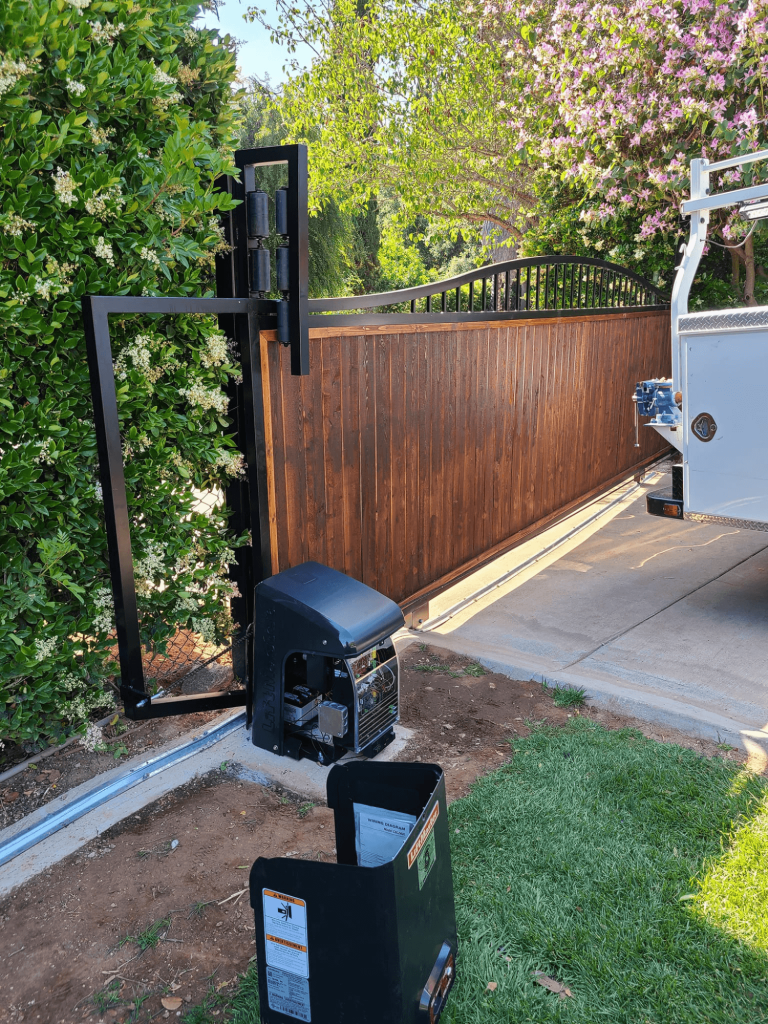
Running a gate off-grid starts with one number: the gate cycle load. That number tells you exactly how much power the operator draws each time the gate opens and closes, and everything else, the panel, the battery, the charge controller, gets sized from there. Skip that calculation and you're guessing, which means an undersized battery that dies after a cloudy week or an oversized array that costs more than it needs to.
Here's what most homeowners don't realize: the panel isn't the hard part. Choosing the right deep-cycle battery, one designed for repeated daily drain-and-recharge cycles, is where most off-grid gate systems either succeed or fail over time. At Access Experts 247, every solar gate system quote in Miami-Dade starts with the cycle load number, not a catalog package or a "standard residential" kit. Our team handles gate operator installation and repair with specific operator models and cycle loads factored into every build.
We've Installed Solar Gate Systems Along the Krome Avenue Corridor
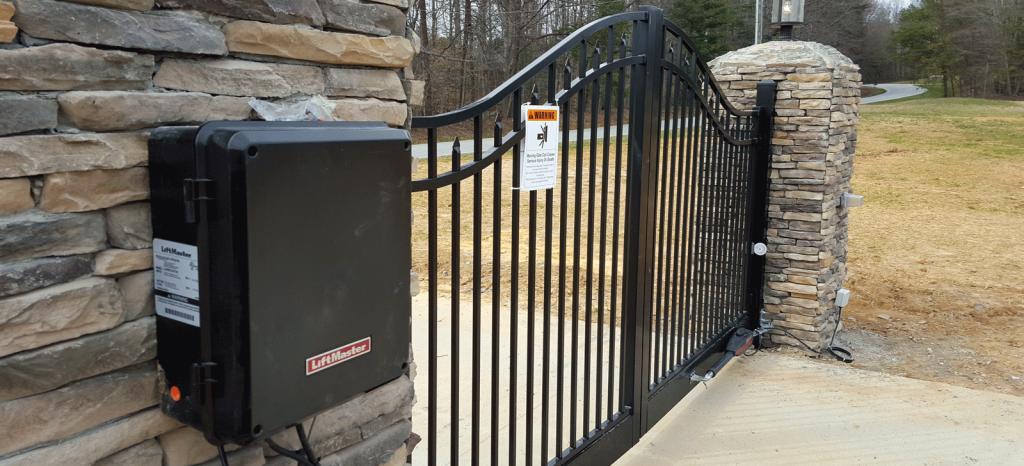
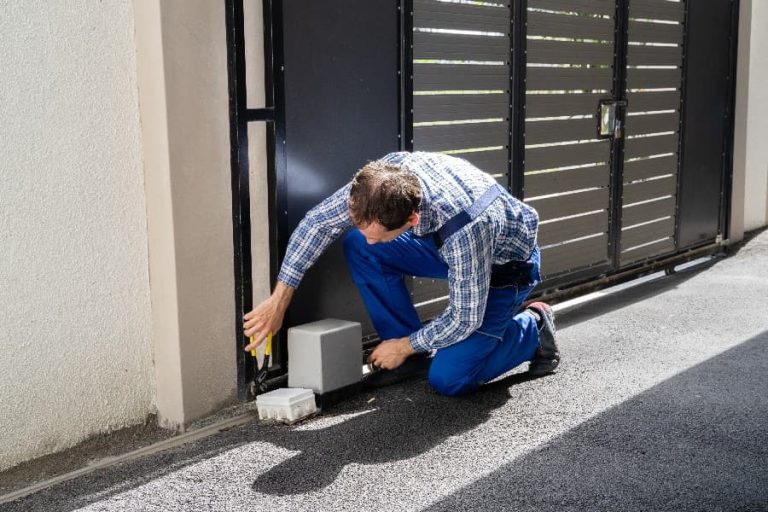
Western Miami-Dade has specific conditions that change how a solar gate system gets built. The Krome Avenue corridor, running through Homestead, Redland, and Florida City, is where most of our solar work is concentrated. Trenching 80 to 150 feet of conduit through a gravel driveway or agricultural property just to reach a gate isn't practical: it requires a permit, a licensed electrician, and weeks of wait time. Understanding permits and approvals for gate installation is essential before any trenching begins, and the full Miami-Dade County building permit requirements apply to conduit work through driveways or agricultural property.
Miami-Dade averages around 5 to 5.5 peak sun hours per day, the daily window when sunlight is strong enough for a panel to hit rated output, and that drives panel sizing directly. More peak sun hours means a smaller panel does the same job, a real advantage in South Florida. The western environment also introduces hardware stressors; understanding how South Florida's climate affects gate hardware is critical to building a system that lasts. We dispatch to the western corridors within our standard 45-minute window, same as anywhere else in the county.
How the Cycle-Load Calculation Determines Every Component in Your System
We start with the gate cycle load, the amp-draw of the specific operator model multiplied by the seconds it runs per cycle. A residential swing operator might pull 3 to 5 amps for 15 to 20 seconds; a heavy commercial slide operator might pull 8 to 12 amps for 30 seconds. For gate motor replacement and amp-draw specs on both, those figures drive every decision downstream.
Multiply that out, factor in daily cycles, and you have the operator's daily energy demand in watt-hours. We add a safety margin, typically 20 to 25 percent for Miami-Dade's occasional overcast stretches during hurricane season, to find the minimum battery capacity. Properties needing hurricane-rated gate systems see that margin applied to both structural and solar components. Panel wattage is then calculated against those 5 to 5.5 peak sun hours.
| Gate Type | Daily Cycles | Panel Wattage | Battery Capacity |
|---|---|---|---|
| Residential swing (single) | 6-10 | 20-30W | 18-26Ah |
| Residential slide | 10-20 | 30-40W | 26-40Ah |
| HOA / community entry | 30-50 | 60-80W | 55-75Ah |
| Agricultural / rural gate | 4-8 | 20-30W | 18-26Ah |
These are starting points, not final specs. The operator model, gate weight, and local shading all shift the numbers.
Your Solar Gate Will Keep Cycling Through Overcast Weeks and High-Traffic Days
A correctly sized solar gate system handles cloudy weeks without dropping to manual override. South Florida's wet season runs June through October, which is also hurricane season, and extended overcast periods are real, sometimes three to five days of heavy cloud cover in a stretch.
A solar charge controller, the device between the panel and the battery that regulates power flow, manages this using float charge, the low-level current sent to a full battery to keep it topped off without stressing the cells. When sun returns, the controller brings the battery back to full before the system draws on it again. We also build in trickle charge redundancy on any system sized for 30 or more daily cycles, a backup that keeps the battery from fully depleting during long cloudy periods. It adds about 10 percent to the battery spec and prevents a dead gate the morning after a long rain event.
Follow the Power Chain: Panel, Charge Controller, Battery, Operator
Every solar gate motor in Miami-Dade runs through the same four-component chain. Understanding it explains what can fail and what we check at commissioning.
Solar Panel
Absorbs sunlight and converts it to DC electricity; wattage determines how fast the battery recharges between cycles. We mount panels at a fixed tilt optimized for Miami-Dade's latitude (about 25.8°N), not a generic 30° default.
Charge Controller
Regulates voltage into the battery, preventing overcharge and deep discharge. We use PWM or MPPT depending on size; MPPT recovers 10 to 30 percent more energy from the same panel in partially shaded conditions.
Deep-Cycle Battery
Stores energy between sun hours and gate cycles, handling daily discharge without degrading the way automotive batteries do. We spec sealed AGM units for outdoor use: no maintenance, no off-gassing.
Gate Operator
Draws from the battery on demand and never "sees" the panel directly, only the battery. That's why battery sizing matters more than panel size in most residential applications.
How We Size, Source, and Commission a Solar Gate System in a Single Visit
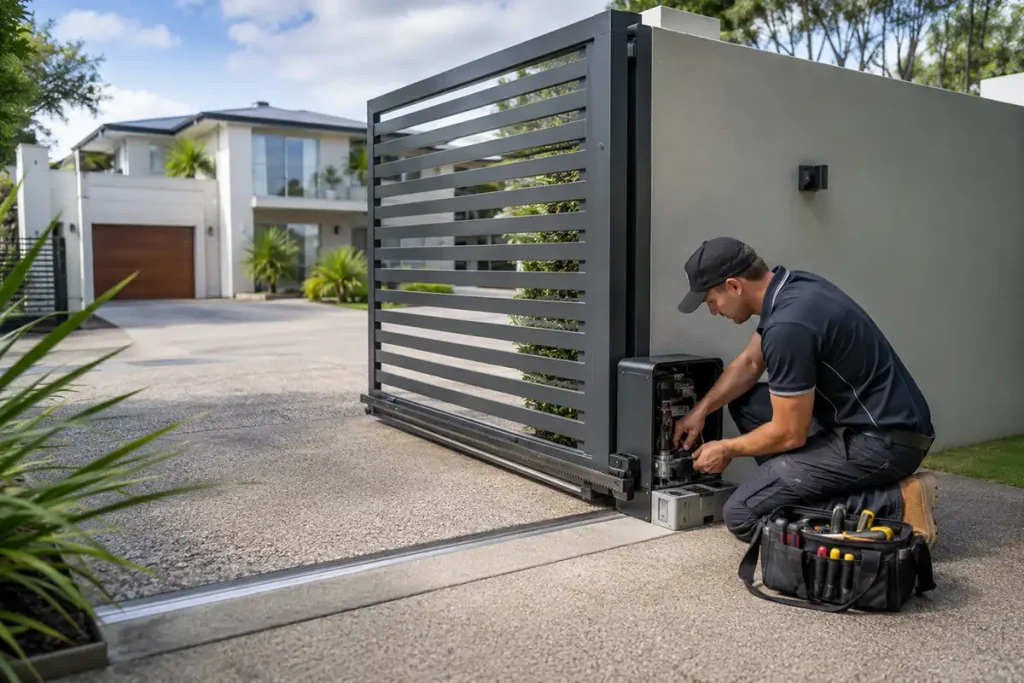
A solar gate operator installation from Access Experts 247 runs through three phases in one visit.
Diagnostics
We pull the operator model number, confirm gate weight and daily cycle frequency, and check the mount location for shading from trees, overhangs, or structures. We measure the distance from the panel to the operator to spec wire gauge correctly, since undersized wire causes voltage drop that shortens battery life.
Implementation
The panel goes up first at the correct tilt for Miami-Dade latitude. The charge controller is wired between panel and battery, and the deep-cycle battery connects to the controller output and the operator terminals. We seal all outdoor connections against humidity, since bare terminals corrode fast in salt air near the coast.
Post-Service Testing
We cycle the gate at least 10 times while monitoring battery voltage, confirm the controller is reading and logging panel input, and set the low-voltage cutoff to the battery manufacturer spec. You get a written cycle log and controller settings before we leave.
Solar Gate Installations Across Miami-Dade, Broward, and Palm Beach
Access Experts 247 installs solar electric gate systems across three South Florida counties. Every location falls within our 45-minute dispatch window. Call us to confirm coverage for your specific address.
Ready to Go Off-Grid? Here's How to Get a Load Calculation and Quote
Getting a solar gate system quote starts with your operator model number. If you know it, have it ready when you call; if you don't, our techs pull it on-site. Reach us any time, 24/7. We'll schedule a site visit, run the cycle-load calculation, and quote panel wattage and battery capacity specific to your gate, not a generic residential package.
Call us nowGet Your Cycle-Load Calculation
Share your operator model number if you have it, plus daily gate use, or call us. We run the cycle-load calculation and quote panel and battery capacity specific to your gate.
Request Quote
Frequently Asked Questions
How many solar panels does a gate system actually need?
One 20 to 40W panel handles most residential gates with under 20 daily cycles. Panel wattage gets calculated against your operator's specific amp draw and Miami-Dade's 5 to 5.5 peak sun hours per day. A high-traffic HOA entry running 40+ cycles may need 80W or more. Panel wattage rating means the maximum output under ideal conditions; your daily cycle load determines the real number.
What does a solar gate system cost compared to running a power line?
Trenching conduit to a remote gate entry typically costs $2,000 to $6,000 before the operator is even touched. A solar gate system eliminates that trench entirely. Exact system cost depends on operator model, daily cycles, and battery capacity required. Call us for a load-calculation-based quote specific to your gate.
Can an existing electric gate be converted to solar power?
Yes, most existing gate operators have battery terminals that accept a solar charge controller connection directly. We verify your current operator's amp draw, calculate the required panel wattage and deep-cycle battery size, then wire the solar components into the existing system. No new operator is needed unless the current one is already failing.
What happens to my solar gate during a week of heavy cloud cover?
A correctly sized system runs through three to five overcast days without dropping to manual override. We build in a 20 to 25 percent safety margin on battery capacity specifically for South Florida's wet season. Float charge, the low-level current keeping the battery topped off, activates the moment sun returns, restoring full capacity before the next heavy-use period.
How long does a solar gate system installation take from site visit to working gate?
Most residential solar gate installations complete in a single visit of 2 to 4 hours. We pull the operator model number on arrival, confirm shading conditions, mount the panel, wire the charge controller and deep-cycle battery, then run a 10-cycle post-installation test before leaving. You receive a written cycle log and controller settings at the end of that visit.
What makes your solar gate sizing different from buying a kit online?
Every kit assumes a generic load. We calculate your specific gate's amp draw, multiply by your actual daily cycles, then size the battery and panel to that number. A residential kit undersized by 20Ah fails after the first cloudy week. Our cycle-load calculation prevents that; it's the first step on every solar gate quote we run.