
Commercial Automatic Door: Repaired and ADA-Verified the Same Day
Microwave, infrared, and pressure-mat sensors replaced on-site. Sensor, drive unit, and ADA timing, diagnosed and resolved in a single visit.
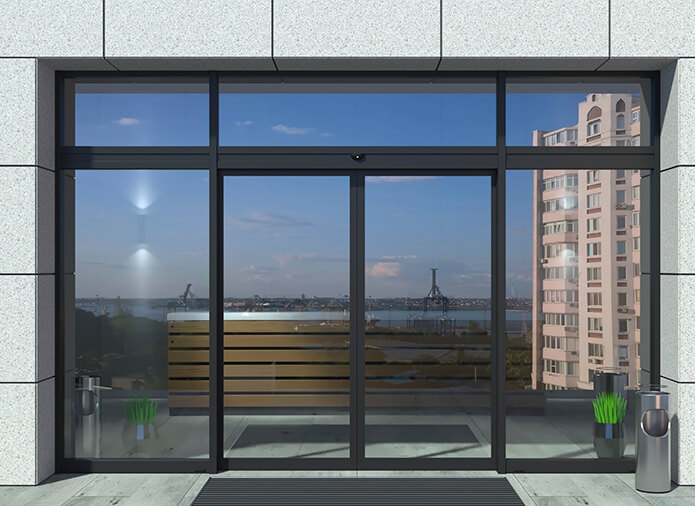
Is It the Sensor, the Drive Unit, or the Operator Timing?
Automatic door repair for commercial properties covers three distinct failure points: the sensor, the drive unit, and the timing settings. A sensor that drifts stops detecting people approaching. A drive unit, the motor and assembly that physically moves the door, starts lagging or fails to complete the cycle. Operator timing that is out of spec makes a door that passes a mechanical test still fail an ADA Title III accessibility walkthrough.
These aren't the same problem, and treating them as the same is how a repair visit turns into a second visit. Access Experts 247 handles automatic door repair across retail storefronts, medical office entrances, hotel lobbies, and multi-family common areas throughout Miami-Dade. Every call covers diagnosis first, sensor, drive unit, timing, before any part is quoted.
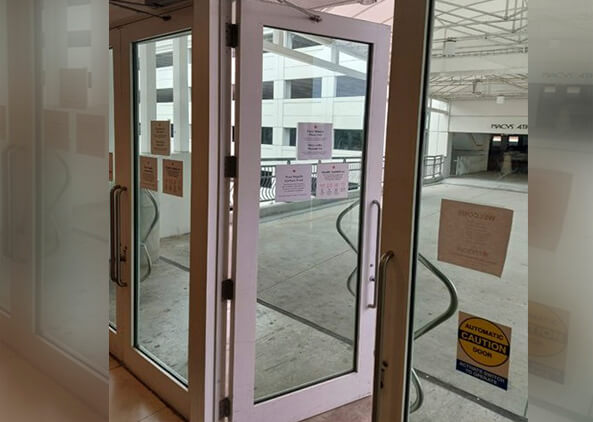
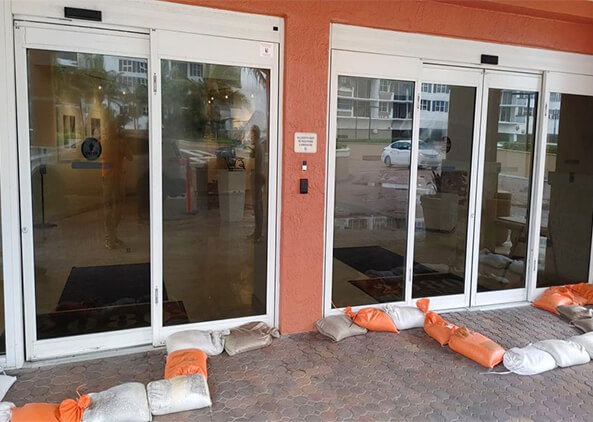
Serving Lobbies, Retail Fronts, and Medical Facilities Across Miami-Dade
With 15+ years servicing Miami-Dade commercial properties, from Brickell high-rises to Doral business parks to the Collins Avenue hotel corridor, we know the local demands. Hotels run doors 18+ hours a day. Medical facilities use sliding glass door configurations that must meet ADA clearance and timing. Retail storefronts wear sensor alignment faster from high cycle counts.
One factor managers underestimate: Miami-Dade's humidity and salt content accelerate wear on sensor mounting hardware. A microwave sensor can hold calibration for years in a dry climate; in a coastal building it may drift within months as the bracket corrodes. See how coastal humidity accelerates corrosion. Commercial work also stays aligned with the Miami-Dade County Building Department.
What Happens When a Commercial Automatic Door Fails
It's 9:03 AM. The front doors at a medical office in the Health District are stuck open, patient flow is starting, and the doors aren't responding to either the microwave or infrared sensor. The manager calls us for 45-minute emergency response.
The first check isn't the drive unit, it's sensor alignment at the header mount. Close to Biscayne Bay, bracket screws corrode invisibly; a sensor that looks square can be off-axis by four degrees, enough to stop activation from a shallow approach. That check takes three minutes and ends roughly one in four sensor calls with no parts order.
If alignment is fine, the next stop is the drive unit, belt and wheel wear usually show before the motor fails. On this Health District call, the bracket was the culprit: tightened, recalibrated, back in cycle, ADA timing checked at close-out, written confirmation before the technician left. A door stuck open also carries an energy penalty.
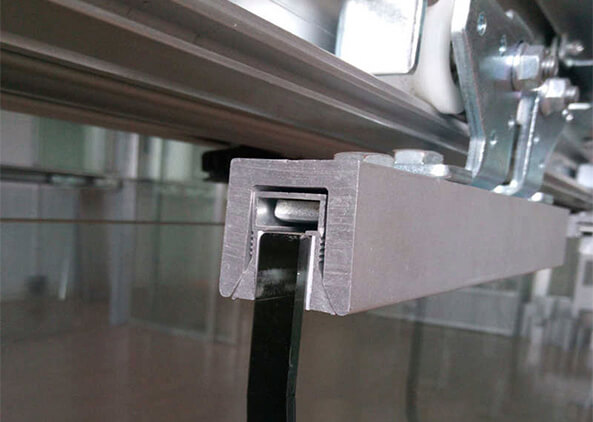
ADA Title III Timing and Force: Checked on Every Repair Close-Out
ADA compliance isn't just whether the door opens, it's how fast it opens, how long it stays open, and how much force it takes to stop mid-swing. A door that passes a mechanical repair but closes too fast still fails Title III; a low-energy operator sped up for traffic flow may no longer meet the force threshold. We run this check on every commercial close-out, not as an add-on, not only on request. For medical offices and hospitality properties, that record matters at insurance renewal, lease renewal, and any ADA access complaint. A mechanical fix without a compliance check hands that risk back to the property manager. We don't do that.
Sensor Types We Service: Microwave, Infrared, and Pressure Mat
Three sensor types activate most commercial automatic doors, and each one fails differently. We carry replacements for all three on the truck.
Microwave Sensors
Emit microwave signals and detect motion in the zone in front of the door, common at retail entrances and medical lobbies. When one drifts, it either opens with no one present (running HVAC against outside air) or stops activating. In Miami-Dade, the usual cause isn't the sensor, it's mounting hardware corroding and shifting the aim by a few degrees.
Infrared Sensors
Detect body heat or interruptions in an infrared beam, usually in pairs, one for approach, one to hold the door while someone is in the path. A dirty lens causes false triggers; in outdoor-adjacent lobbies, dust and humidity buildup is routine. Most infrared calls resolve with a cleaning and recalibration before any replacement.
Pressure Mats
A flat sensor pad embedded in the floor, weight signals the door to open or hold, often in high-traffic zones. The most common Miami-Dade failure is moisture intrusion under the mat from cleaning or rain; water in the wiring housing causes intermittent signals, so the door hesitates, opens late, or stays open.
What the Technician Documents Before Leaving Your Property
Every commercial repair follows the same sequence, regardless of property type, door configuration, or time of call.
Diagnostics
Dispatch confirms the address, door type, and failure description, sent to the technician before dispatch so they arrive with the likely components on the truck. On-site, a three-point check: sensor alignment and signal, drive unit cycle and belt, operator timing and force. Same discipline at 7 AM or midnight.
Repair
Once the failure point is confirmed, the scope is explained to the property contact before any work begins. Sensors are installed, re-aimed, and signal-tested against the cycle. Drive unit service checks belt, wheel wear, and motor output separately. ADA Title III timing and force are recorded post-repair.
Post-Service Documentation
The door runs at least five complete open-close cycles before sign-off. Timing is measured against ADA Title III thresholds and force tested at the low-energy standard where applicable. The contact gets a written summary, useful at insurance renewal, lease audit, or ADA review. We also offer integrated access control systems.
Brickell, the Health District, Doral, and the Hotel Corridor: We Cover It All
We dispatch to commercial properties across all of Miami-Dade within 45 minutes, the Brickell corridor, the Health District medical campus, Doral business parks, and the Collins Avenue hotel and retail corridor from Miami Beach to Sunny Isles. Multi-family lobby doors in Aventura and North Miami are part of our standard commercial service area.
Facility Manager? Call Us Directly and Skip the Queue
Call us and tell us it's a commercial automatic door, those calls are handled as priority. Sensors, drive units, and ADA timing checks all happen in a single visit. Available 24 hours a day, 365 days a year.
Call us nowWhy Facility Managers Call Us
Priority handling for facility calls.
Title III timing & force, every visit.
Microwave, infrared, and pressure-mat.
What was found, done, and verified.
Most repairs done in one to three hours.
365 days a year, building-manager line.
Schedule Commercial Service
Tell us the property type, door configuration, and what the door is doing, or call us and say it's a commercial automatic door for priority dispatch.
Request Service
Frequently Asked Questions
How quickly can you reach a commercial property in Miami-Dade for an automatic door repair?
We reach commercial properties throughout Miami-Dade within 45 minutes of dispatch, medical offices, retail storefronts, hotel lobbies, and multi-family common areas. Tell the dispatcher it's a commercial automatic door for priority handling. Available 24 hours a day, 365 days a year.
What does it cost to repair an automatic door sensor at a commercial property?
Cost depends on the sensor type, the mounting condition, and whether corroded hardware needs replacement alongside recalibration. Most sensor calls close in a single visit with parts on the truck. Call us and describe the door for a quote before any work begins.
Does your ADA compliance check cost extra, or is it included in the repair visit?
The ADA Title III timing and force check is included in every commercial repair close-out, not a separate charge. We measure opening speed, hold-open duration, and closing force against Title III thresholds, documented in writing before the technician leaves. No additional scheduling or billing is required.
How long does a typical commercial automatic door repair take on-site?
Most are completed in a single visit of one to three hours. Sensor recalibrations and drive unit belt replacements are the most common jobs, and parts for both are on the truck. Properties with high-humidity mounting hardware issues may take longer if bracket replacement is needed alongside the sensor work.
What makes this service different from a general door repair company?
Every close-out includes an ADA Title III compliance check, not an optional add-on, but a standard step. Most general companies finish the mechanical fix and leave; we verify timing, force, and hold-open duration against Title III and provide written documentation. For medical offices, hotels, and condo lobbies, that record matters at insurance renewal and lease audit.
Can you service a commercial automatic door while the building is open and occupied?
Yes, most repairs are completed while the property operates. For single-entrance buildings, we coordinate sequencing with the contact to minimize downtime. High-traffic windows, like morning patient arrival, are factored into dispatch scheduling when you describe the property at the time of your call.